How to Boost Collagen in Face With Creams, Light, and Sun Care
By Tseng Plastic Surgery
The best collagen strategy starts with protecting what your skin already has. Collagen gives skin strength and elasticity, but production begins to decline after age 25, and UV exposure can damage collagen fibers. Learning how to boost collagen in the face means looking beyond a single cream or treatment: sun protection, supportive skincare and healthy habits each have a role.
It’s understandable to hope a collagen cream can soften wrinkles or restore firmness on its own. The reality is more nuanced: topical products, nutrition, and light-based approaches work differently, and none is a universal fix. Understanding what each can and can’t do helps you make choices based on your skin’s needs.
This guide explains what collagen is, how creams and natural methods relate to it, what to consider about red light therapy, and why consistent sun care matters. You’ll get a clearer picture of practical daily steps and when professional facial rejuvenation may be worth discussing.
Key Takeaways
- Understand why collagen creams may not address deeper changes in skin firmness, and what evidence says about oral collagen.
- Learn how nutrients support the body’s collagen production and which dietary claims deserve a measured view.
- Consider what red light therapy may contribute and why the type of device and its use matter.
- Make sun protection part of your routine to help limit UV-related collagen damage.
1. Do skin creams containing collagen get rid of wrinkles?
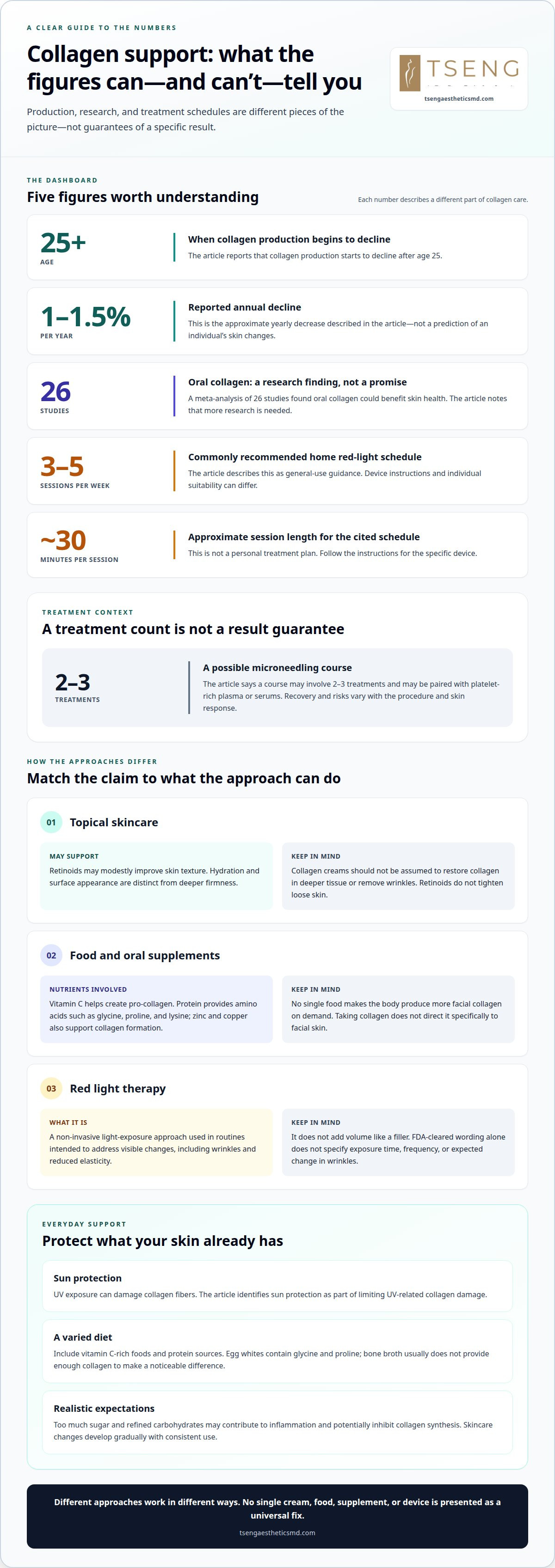
Collagen gives skin strength and structure, while supporting elasticity. It forms part of connective tissue beneath the visible surface. That framework helps explain why changing production may affect firmness and how lines appear. Production starts to decline after age 25. It falls by about 1% to 1.5% each year.
A topical collagen cream shouldn’t be expected to restore collagen in deeper tissue or remove wrinkles. An ingredient’s presence alone doesn’t show how it affects skin structure. The American Academy of Dermatology says retinol creams or lotions may slightly improve texture, but they don’t penetrate deeply enough to tighten loose skin. That distinction matters: smoother texture and restored firmness are different outcomes. When reading a label, separate claims about hydration or texture from claims about rebuilding collagen.
For Skin Regimen LX, the product name alone doesn’t establish its ingredients or prove a collagen effect. Review the stated ingredient list and claims rather than assuming the name reveals the formula. For example, a cream that advertises collagen should explain how its ingredients address skin texture. That claim isn’t evidence that collagen levels in facial tissue have increased. Check whether the claim is about surface appearance, elasticity, or deeper firmness.
Oral supplements differ from topical creams because they’re ingested, not applied to skin. According to the National Library of Medicine, a meta-analysis of 26 studies found oral collagen could benefit skin health, though more research is needed. This finding supports cautious interest, not a promise of wrinkle removal for every person or product. Supplement formulations vary, so consider the ingredient list and intended use before adding one to a routine. Lifestyle habits and sun exposure also influence collagen levels, making supplements only one part of a broader approach.
2. Can any natural methods boost collagen?
Diet supports collagen production by supplying nutrients the body uses to form it. Vitamin C helps create pro-collagen, a precursor to collagen. Include vitamin C-rich foods and protein sources that provide amino acids such as glycine, proline, and lysine. Zinc and copper also support collagen formation.
Egg whites contain glycine and proline, while bone broth usually doesn’t provide enough collagen to make a noticeable difference. A varied diet supplies building blocks, but no single food makes the body produce more facial collagen on demand. Too much sugar and refined carbohydrates may contribute to inflammation and potentially inhibit collagen synthesis.
Oral collagen supplements are another option, but they differ from nutrients that support the body’s own production. The body uses dietary protein and amino acids in many processes; taking collagen doesn’t direct it specifically to facial skin. Supplements also vary in formulation, and over-the-counter dietary supplements aren’t regulated by the U.S. Food and Drug Administration.
Among topical ingredients, retinoids have evidence for modestly improving skin texture, but they don’t tighten loose skin. Vitamin C supports collagen formation in the body, but topical vitamin C, peptides, and collagen creams shouldn’t be assumed to increase collagen in deeper skin tissue. Retinoids are generally introduced gradually. Dryness, redness, or peeling can occur, so follow product directions and seek clinical guidance if irritation persists.
Microneedling creates controlled skin injury to stimulate collagen production during repair. A course may involve 2-3 treatments, and it may be paired with platelet-rich plasma or serums. Laser treatments use light energy, while radiofrequency uses heat; the method and depth shape the treatment approach. Recovery and risks vary with the procedure and skin response.
Skincare changes develop gradually with consistent use, while treatment results emerge as skin heals and remodels. The pace depends on the ingredient or procedure, your skin’s response, and consistency with the routine.
3. Red light and other light therapy
Red light therapy uses light exposure as a non-invasive approach to skin care. It’s used in routines intended to address visible changes, including wrinkles and reduced elasticity. Unlike a filler, it doesn’t add volume. Its purpose differs from treatments designed to change facial contours or firmness directly. If you’re exploring how to boost collagen in the face, it’s one approach to understand alongside other options.
Consistency matters for home devices. A commonly recommended schedule is 3-5 sessions per week, with each session taking around 30 minutes. These figures describe general use and cost, not a personal treatment plan. Before investing in home equipment, consult a specialist about the device, its instructions, and whether light therapy suits your goals.
Some devices are described as FDA-cleared. That wording alone doesn’t tell you the recommended exposure time, treatment frequency, or expected change in wrinkles. Read the device instructions and distinguish clearance language from promises about collagen or skin firmness. Devices and directions differ, so don’t assume one schedule applies to every product.
Red and blue light therapy aren’t interchangeable labels. A device offering both uses distinct light settings, and its instructions should explain how each is intended to be used. Don’t assume blue light also stimulates collagen or that combining colors improves results. Collagen supplements work through a different route, while light therapy depends on exposure to the device’s light. This distinction helps clarify how to boost collagen in the face without confusing separate approaches.
Think of light therapy as one possible part of a skin-care plan, not a substitute for sun protection or a guaranteed way to restore firmness. Consider whether a device’s instructions, routine, and intended use suit your needs. If loose skin is your main concern rather than surface texture, that difference can help determine which treatments are relevant.
4. Sun protection and UV-related collagen damage
Ultraviolet (UV) exposure can damage collagen fibers, while aging also reduces collagen production. Repeated sun exposure may contribute to visible changes in skin texture and firmness. Sunscreen and clothing that covers the face and body help protect skin from sunlight. These measures help limit further damage, but they don’t replace collagen already lost.
Make protection a consistent part of your daytime routine. Apply sunscreen according to its package directions, and use a hat or clothing to cover exposed skin. For example, a wide-brimmed hat can shade your face during outdoor activities. Clothing and sunscreen work together, especially when your face remains exposed for extended periods. Choose practical protection you can maintain instead of relying on occasional use.
Nutrition supports a different part of the picture. Protein supplies amino acids the body uses to produce collagen, a structural protein in connective tissue. Proline, lysine, and glycine participate in collagen synthesis, while vitamin C helps the body form collagen. A balanced diet provides these building blocks, but no single food can direct collagen specifically to facial skin. Vitamin C also acts as an antioxidant, but eating antioxidant-rich foods doesn’t cancel the effects of UV exposure.
Think of sun care and nutrition as complementary habits. Sunscreen and face-covering clothing reduce ongoing exposure, while adequate protein and varied foods support normal collagen formation. Neither approach can promise that wrinkles will disappear or restore firmness on its own. If changes in facial laxity remain a concern despite consistent skin care, explore facial rejuvenation options suited to your goals.
Tseng Plastic Surgery: Minimal invasive preservation face and neck lift
Tseng Plastic Surgery offers a minimal invasive preservation face and neck lift for people considering a procedural approach to facial and neck changes. This is distinct from creams, nutrition, or light therapy: a lift addresses visible sagging rather than increasing collagen production. It may be worth discussing when looseness in the face or neck remains your main concern despite consistent skin care and sun protection.
A conversation can help clarify how your concerns, preferences, and desired degree of change relate to available options, including a facelift. The right approach depends on your goals and the areas you want addressed, not simply on collagen levels.
Contact Tseng Plastic Surgery to discuss your facial rejuvenation goals.
Choose a Next Step That Fits Your Goals
A useful next step is to define the change you want rather than choosing a treatment based on a trend. Is your priority smoother-looking skin, improved firmness, or a more refreshed facial contour? That distinction can help you understand how to boost collagen in your face while keeping expectations aligned with what skincare and professional options can address.
If visible looseness is your main concern, a conversation about facial rejuvenation can help clarify whether a procedural approach fits your goals. Tseng Plastic Surgery offers facelift and minimal invasive preservation face and neck lift options. These procedures address facial and neck changes differently from topical care, so the discussion starts with your priorities and desired outcome.
Contact Tseng Plastic Surgery to discuss your concerns and explore a considered next step. An informed choice can make your approach feel more personal, purposeful, and aligned with the way you want to look.
Frequently Asked Questions
What is collagen?
Collagen is a structural protein that helps support connective tissue, including skin. The body contains at least 28 types, each with distinct roles in different tissues. In facial skin, collagen contributes to strength and elasticity, while other components also influence hydration and texture. This is why changes in skin appearance don’t necessarily reflect collagen alone.
Can any natural methods boost collagen?
Natural habits can support the body’s collagen production, though they don’t target the face alone. Include protein foods and sources of vitamin C in a varied eating pattern. For example, an egg-based meal with fruit or vegetables can combine protein with vitamin C-rich foods. Limiting excess sugar and refined carbohydrates may also support overall dietary balance.
Do skin creams containing collagen get rid of wrinkles?
Collagen in a cream shouldn’t be expected to erase wrinkles or rebuild deeper skin structure. A topical product may support surface care, but its ingredient list and stated purpose matter more than the word “collagen” on the label. The American Academy of Dermatology notes that retinol may slightly improve texture, but doesn’t tighten loose skin.
What causes collagen loss in facial skin, and at what age does it begin?
Age-related changes and ultraviolet exposure both contribute to collagen decline in facial skin. Production begins to slow after age 25 and declines by about 1% to 1.5% each year. The pace and visible effects differ between people. Repeated sun exposure can add damage over time, making sun-protective habits relevant at every age.
Does daily sunscreen prevent collagen loss and improve facial skin?
Sunscreen helps protect exposed skin from UV-related collagen damage, but it can’t prevent every age-related change or guarantee wrinkle improvement. Apply it as directed on the product label, and pair it with clothing that covers your face or a hat outdoors. This combination is useful during everyday activities, not only at the beach or during extended time outside.
Do collagen supplements improve facial skin, and what dose and cost are typical?
Oral collagen may support skin health, but evidence doesn’t establish a universal dose or cost for every supplement. The National Library of Medicine reports that a meta-analysis of 26 studies found possible benefits, while noting that more research is needed. Products differ in formulation and serving instructions, so follow the label and compare the amount per serving and package size.

