When Can I Drive After Liposuction? Safety and Recovery
By Tseng Plastic Surgery
Arrange a ride home before liposuction, and don’t plan to drive yourself after sedation or anesthesia. After general anesthesia, wait at least 48 hours before driving; you also shouldn’t drive while taking narcotic pain medication. So, when can I drive after liposuction? The timing depends on the anesthesia and medication involved, as well as whether you can move and respond comfortably behind the wheel.
It makes sense to want a clear date, especially when you’re organizing help at home and planning time away from work. But returning to driving safely is about more than the calendar: you need to sit upright, turn to check blind spots, and brake quickly without significant discomfort. Sedation, pain, and restricted movement can all affect your ability to drive safely.
This article explains how medication and recovery affect the decision, why arranging transportation and support matters, and how to plan work around healing. You’ll also learn which functional signs to consider before getting back behind the wheel, so your recovery plans can be practical and safe.
Key Takeaways
- Plan transportation before surgery, since anesthesia and early recovery can make driving yourself home unsafe.
- Medication effects matter: being off narcotic pain medicine is essential, but you also need to feel alert and physically able to drive.
- Arrange support at home so you have help while managing early recovery and everyday needs.
- Match your return-to-work plans to your comfort, mobility, and job demands rather than assuming driving readiness means you’re ready for every activity.
Arranging transportation to and from surgery
Arrange your ride before liposuction, not after you arrive for surgery. If you receive anesthesia or sedation, you should not drive yourself home. Ask a trusted adult to take you home and stay available while you settle in. Sedation can leave you groggy, and soreness can make getting in and out of a vehicle difficult.
Organize support for the first day as well. Someone should stay with you for 24 hours after surgery to help with medication, bathroom visits, and urgent needs. Patients are also advised to arrange support for 24 to 48 hours, and help with household tasks may be useful for a week or two. For example, ask your support person to handle meals and errands while you focus on rest.
Before your consultation ends, ask your surgeon which anesthesia is planned, how it may affect driving, and what signs indicate you’re ready to drive again. Ask when you can safely stop relying on a ride and whether pain medication affects that timing. Confirm your follow-up schedule, too. Appointments may be planned for the day after surgery, the next Monday after a Friday procedure, approximately one week later, or two weeks after liposuction. These visits allow the surgical team to assess your recovery and discuss activity.
Arrange transportation for follow-up appointments rather than assuming you’ll be able to drive to them. Keep your driver’s number accessible, confirm pickup arrangements before the procedure, and identify a backup adult in case plans change. If you wear a compression garment, follow instructions for keeping it in place during the trip home. Choose a ride that lets you sit comfortably and avoid unnecessary exertion.
Ask your surgeon: “Which anesthesia and medication may affect driving, and what must I be able to do before I drive?” Also ask which follow-up visit comes first and how you’ll get there. Clear answers make transportation a practical part of your recovery plan.
Pain medication and driving safety
Driving readiness after liposuction depends on alertness, pain control, and your ability to respond safely. Anesthesia, medication, and the treated area can all affect these abilities.
Anesthesia and Medication Effects
Anesthesia and pain medication can slow responses, cause grogginess, and make it harder to control a vehicle. After general anesthesia, wait at least 48 hours before driving. IV sedation can also affect alertness, so allow recovery time before considering the driver’s seat.
Review your instructions for the specific anesthesia and medication used. A clear head is essential, but it’s not the only consideration: you also need to sit upright, turn to check blind spots, and brake quickly without significant discomfort. If swelling or soreness makes any of these movements difficult, arrange another ride.
Driving While Taking Prescription Pain Medication
Prescription narcotic pain medication and driving don’t mix. Don’t drive while taking narcotic pain relief, since it can impair alertness and response time even when you feel more comfortable.
Wait at least 24 hours after your last prescription pain medication dose before driving. Then assess whether pain or swelling still limits movement. For example, if turning to check a blind spot or pressing the brake causes pain, you aren’t ready to drive safely. Follow your surgeon’s medication instructions, and use a ride rather than relying on another dose wearing off during the day.
The treatment area matters, too. Liposuction around the abdomen may make sitting upright or twisting uncomfortable; treatment near the arms may affect steering. These are practical examples, not a fixed timeline. The key test is whether you can control the car and react without pain distracting you.
Body contouring recovery can involve changing comfort levels as swelling and soreness shift. Don’t treat a short trip as proof that longer or more demanding driving is safe. A passenger can assist with errands while you assess your movement and alertness. For a personalized discussion of recovery planning, discuss your recovery plan.
Arranging a ride home after liposuction
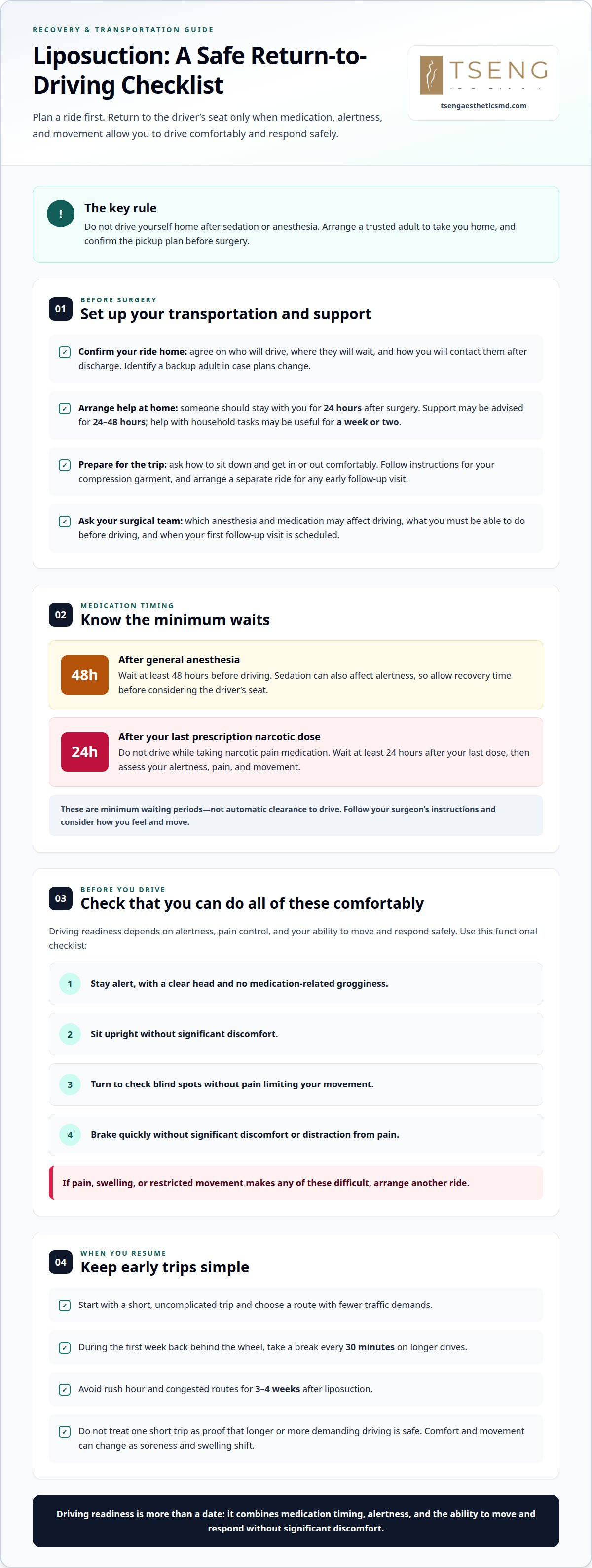
Arrange your ride before surgery and confirm the pickup plan with your driver. If you receive anesthesia or sedation, you shouldn’t drive yourself home. Liposuction is often an outpatient procedure, so transportation needs to cover the trip home after discharge. Agree on who will drive, where they’ll wait, and how you’ll let them know when you’re ready.
Plan for the vehicle as well as the driver. Ask your surgical team how to prepare for sitting down and getting in or out, especially if your abdomen or thighs are treated. Discomfort can make twisting or lowering yourself difficult. A passenger can help with bags and doors, allowing you to move carefully and follow your recovery instructions.
Wear or bring your compression garment as directed. Compression garments are often recommended after liposuction to support healing and help manage swelling. Your driver should avoid pressing on treated areas while helping you settle in. Keep the route direct and allow time for a calm departure instead of rushing through pickup.
Arrange a backup driver in case the original plan changes. The first 48 hours can involve soreness and limited activity, so don’t make essential errands depend on your ability to travel. Set up food, medication, and household support at home before surgery. If a follow-up visit is scheduled soon after the procedure, arrange that ride separately instead of assuming you’ll be ready to drive.
Once driving resumes, start with a short, uncomplicated trip and choose a route with fewer traffic demands. During the first week back behind the wheel, take a break every 30 minutes on longer drives. Avoid rush hour and congested routes for 3 to 4 weeks after liposuction. The practical takeaway is simple: plan each ride around comfort, healing, and the driving restrictions in your instructions, not merely the calendar.
How long should someone stay with you after liposuction, and who can drive you home?
Choose a trusted adult to drive you home after liposuction involving anesthesia or sedation. You shouldn’t drive yourself, even if the procedure feels routine or the trip is short. Arrange pickup in advance, share the expected discharge plan, and keep your driver available by phone. A taxi or rideshare alone doesn’t provide personal support after sedation.
Plan for someone to remain with you for 24 hours after surgery. That person can assist with medication, bathroom visits, and urgent needs while you recover at home. A suitable helper should be able to stay nearby, follow your instructions, and respond if you feel unwell. If your first choice can’t remain, arrange another trusted adult before the procedure.
Make your support plan practical. Before surgery, place the items you’ll need within easy reach and ask your helper to handle meals or household tasks. You may need help with everyday chores for a week or two after liposuction. For example, arrange help carrying laundry or bringing food rather than stretching or lifting while sore.
Separate the ride home from longer-term assistance. The person who drives you may be able to stay, but confirm this directly instead of assuming. If they can’t remain for the full 24 hours, identify a second helper and agree on when responsibilities change. Keep essential phone numbers accessible, and make sure your support person knows how to reach your surgical team if concerns arise.
A reliable adult driver and an organized home-support plan make the first day more manageable, while practical help can continue as recovery needs change. If you’re planning liposuction, discuss your recovery and transportation plan as part of your care planning.
Tseng Plastic Surgery: Liposuction
Tseng Plastic Surgery offers liposuction and can discuss how your treatment plan relates to recovery and daily activities. If you’re considering the procedure, include transportation and driving in your planning conversation, alongside questions about anesthesia, pain medication, and movement after surgery. These details help you prepare for time at home and understand which factors affect a safe return to driving.
Liposuction is a personal decision shaped by your goals and treatment considerations. A consultation gives you an opportunity to discuss the areas you want treated and ask practical questions about arranging help, follow-up visits, and work plans. Clear planning can make recovery easier to organize without treating a general timeline as personal clearance to drive.
Contact Tseng Plastic Surgery to discuss liposuction and your recovery-planning questions.
Make your recovery plan with confidence
Make returning to driving part of a broader recovery plan, not a deadline set by work, errands, or other people’s schedules. When you can drive after liposuction depends on being alert, comfortable, and able to control the vehicle without pain limiting your movements. Your surgeon’s instructions help apply these considerations to your procedure and recovery.
Before surgery, consider the practical details that could create pressure later: who can help with transportation, which commitments can be postponed, and how you’ll manage if discomfort lasts longer than expected. A thoughtful plan gives you room to focus on healing rather than feeling compelled to drive before you’re ready.
If liposuction is part of a change you’re considering, a conversation can help you understand the procedure and plan for recovery. Discuss your liposuction goals and recovery questions with Tseng Plastic Surgery. Thoughtful preparation can help you approach the next step with clarity and confidence.
Frequently Asked Questions
Driving After Liposuction: When Is It Safe to Drive?
Drive only when the effects of anesthesia have cleared, you’re not taking narcotic pain medicine, and you can control the car without pain or restricted movement. Before setting out, make sure you can sit upright, turn to check blind spots, and brake quickly. A quiet, familiar route can make the first trip less demanding, but it doesn’t replace these safety conditions.
How Can I Maximize My Body Contouring Results Through Recovery?
Follow your post-surgical instructions closely, including guidance on compression garments, activity, and follow-up care. Garments are often recommended to support healing and manage swelling, but wear them as directed for your procedure. Don’t use early changes in swelling to judge your final contour: results typically begin to show by six months, and settling can take a year.
How long does liposuction recovery take?
The initial recovery period after liposuction is generally three to four weeks, while some effects can last longer. Mild soreness may continue for three to six weeks, and swelling can persist for weeks or months. These milestones describe different stages of recovery: feeling more comfortable doesn’t mean all swelling has resolved or your final results have settled.
How long after liposuction can you drive?
The answer to when I can drive after liposuction depends first on anesthesia and medication. After general anesthesia, wait at least 48 hours; don’t drive while taking narcotic pain relief, and wait at least 24 hours after your last prescription pain medication dose. You must also be able to turn, sit upright, and brake without significant discomfort.
What factors affect when it is safe to drive after liposuction?
Driving readiness depends on alertness, pain, mobility, and the treated area. For example, soreness around the abdomen can make twisting or sitting upright uncomfortable, while arm discomfort may affect steering. Swelling and medication effects can also interfere with concentration or movement. If any of these limits your ability to control the vehicle or respond promptly, don’t drive.
Can you drive while taking prescription pain medication after liposuction?
No, don’t drive while taking narcotic prescription pain medication after liposuction. It can affect alertness and response time, even if it reduces discomfort. Wait at least 24 hours after your last prescription pain medication dose before driving, and make sure pain doesn’t still interfere with turning, steering, or braking. Arrange another ride if you’re not fully able to perform these actions.

